Women's History Month is a celebration of women's contributions to history, culture and society.
The idea for Women's History Month grew out of a week-long event at a California school in 1978. Other communities and schools began holding similar events to celebrate the accomplishments of women and to note the lack of these achievements in the history books.
Why was the month of March chosen?
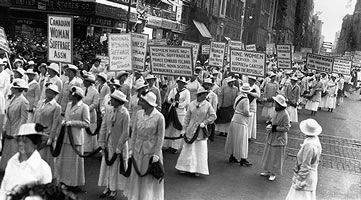
On March 8, 1911, the first International Women's Day was celebrated in Europe. This event was held to fight for women's voting rights. After that, suffrage (the right to vote) marches took place around North America until finally, in 1920, every woman in the United States had the legal right to vote.
Interest in International Women's Day declined during the 1930s, '40s, and '50s. In the 1960s and '70s, the women's movement became more active. Women wondered why they weren't included in the history books and why there were still differences in rights between men and women.
In 1977, the United Nations officially declared March 8 as International Women's Day. In some countries (for example, China, Russia, Vietnam, Zambia), Women's Day is an official holiday where women are honored.
In 1980, 2 years after that first California school event, President Jimmy Carter declared the week of March 8 as National Women's History Week. Seven years later, in 1987, when Ronald Reagan was president, Congress expanded the event to the entire month of March.
Throughout history, many women have stepped forward to fight inequality. Their work to create a fairer society has allowed future generations to enjoy more freedoms and a better life. Women's History Month honors all the women who have made that possible.
Source: worksheetsplus.com/Reading/WomensHistoryMonthWhatIs.html What Is Women's History Month?
©Courseware Solutions Wordville.com for Fun English Language Arts Learning
